Flying Heart Tattoo: Strategic Typography for Distinctive Brand Identity
In the crowded landscape of digital and print communication, typography is rarely just about legibility. It is a primary vehicle for tone, emotion, and brand positioning. When you encounter Flying Heart Tattoo, you are not merely looking at a font; you are engaging with a specific aesthetic language that blends the raw energy of tattoo culture with the whimsical motion implied by its name. This typeface serves as a cool and unique decorative font that, when added to your creative ideas, can yield results that resonate deeply with targeted audiences. However, like any powerful design tool, its value lies not in its novelty alone, but in its strategic application.
For entrepreneurs, marketers, and creative professionals, understanding the nuances of such a distinctive typeface is essential. It is not a universal solution for every project, but rather a specialized instrument designed to evoke specific psychological responses. By examining where Flying Heart Tattoo fits within a broader content strategy, you can make more informed decisions about branding, customer experience, and visual storytelling.
Understanding the Aesthetic and Psychological Impact
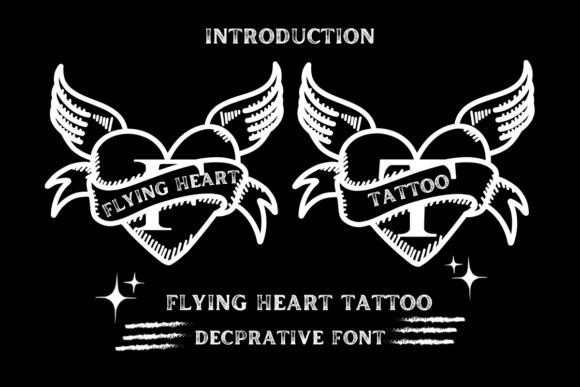
Flying Heart Tattoo draws inspiration from traditional American tattoo lettering, characterized by bold strokes, slight irregularities, and a hand-drawn feel. The "flying" aspect often manifests in subtle swashes or dynamic angles that suggest movement and freedom. Psychologically, this combination triggers associations with authenticity, rebellion, passion, and personal expression. Unlike sterile, geometric sans-serifs that convey corporate efficiency, this font communicates humanity and individuality.
When you integrate this font into your creative workflow, you are signaling to your audience that your brand or message values character over conformity. This is particularly relevant for businesses in lifestyle sectors, such as boutique fashion, artisanal food and beverage, music venues, or personal coaching services. The font acts as a visual shorthand, telling the viewer that the entity behind the message is approachable, creative, and unafraid to stand out.
Key Characteristics to Consider
- High Personality: The font carries a strong voice, making it ideal for headlines but potentially overwhelming for body text.
- Nostalgic Appeal: It taps into vintage aesthetics, which can build trust through familiarity and warmth.
- Visual Weight: Its bold nature demands attention, requiring careful balancing with negative space and simpler supporting elements.
Strategic Applications in Branding and Marketing
The decision to use Flying Heart Tattoo should be driven by clear marketing objectives. It is most effective when the goal is differentiation. In markets saturated with minimalist design trends, a well-placed decorative font can arrest the eye and create a memorable impression. Consider its use in logo variations, limited-edition packaging, or event posters where the objective is to generate excitement and emotional engagement.
For small business owners and freelancers, this font can help establish a unique brand identity without the need for extensive custom illustration. By pairing Flying Heart Tattoo with a clean, neutral secondary font, you create a visual hierarchy that guides the viewer’s attention. The decorative font captures interest, while the secondary font ensures clarity and professionalism. This balance is crucial for maintaining credibility while expressing creativity.
Moreover, in digital marketing campaigns, such fonts can increase click-through rates on social media graphics. Platforms like Instagram and Pinterest thrive on visual distinctiveness. A quote graphic or promotional banner using Flying Heart Tattoo can stand out in a feed dominated by standard templates, thereby improving engagement metrics. However, this requires a thoughtful approach to color contrast and layout to ensure accessibility and readability across devices.
Enhancing Creativity and Productivity in Design Workflows
Integrating unique assets like Flying Heart Tattoo into your creative toolkit can also boost internal productivity. When designers and content creators have access to distinctive resources, they spend less time searching for ways to make generic elements feel special. Instead, they can focus on composition and messaging, knowing that the typographic choice already carries significant weight.
This efficiency extends to brainstorming sessions. Presenting mockups with Flying Heart Tattoo can help stakeholders visualize a bolder direction earlier in the process. It serves as a concrete example of how a brand might pivot towards a more expressive identity. This reduces ambiguity in feedback loops and accelerates decision-making regarding brand positioning.
Practical Tips for Implementation
- Limit Usage: Use the font sparingly for headings, logos, or short phrases. Overuse dilutes its impact and harms readability.
- Pair Wisely: Combine it with simple, highly legible fonts like Helvetica, Open Sans, or Lato to create contrast.
- Test Contexts: Ensure the font renders well at various sizes, especially on mobile screens where intricate details may blur.
- Maintain Consistency: Define clear guidelines for when and how the font is used to preserve brand coherence across all touchpoints.
Risks and Considerations for Long-Term Value
While Flying Heart Tattoo offers significant aesthetic benefits, relying on it without clear goals can lead to strategic missteps. Decorative fonts are inherently trend-sensitive. What feels fresh and edgy today may appear dated in a few years if not anchored by strong underlying brand values. Therefore, it is crucial to view the font as one component of a holistic brand system, not the entire foundation.
Another risk involves accessibility. Decorative fonts can be challenging for individuals with visual impairments or dyslexia. Using Flying Heart Tattoo for critical information, such as pricing, terms of service, or navigation menus, creates barriers to entry and negatively impacts user experience. Ethical design practices dictate that functionality must never be sacrificed for style. Always prioritize clarity for essential communications.
Furthermore, context matters. A font that works beautifully for a rock band’s album cover may undermine the perceived authority of a financial consultancy or a healthcare provider. Misalignment between typography and industry expectations can confuse potential customers and erode trust. Before adopting Flying Heart Tattoo, evaluate whether its playful, rebellious tone aligns with your core mission and audience expectations.
Making Intentional Design Decisions
To maximize the return on investment from using Flying Heart Tattoo, approach its implementation with intentionality. Start by defining the specific emotion or message you wish to convey. Is it nostalgia? Excitement? Authenticity? Once the objective is clear, test the font in real-world scenarios. Gather feedback from diverse user groups to ensure it resonates as intended and does not alienate segments of your audience.
Additionally, consider the longevity of your design choices. If you are building a brand meant to last decades, use Flying Heart Tattoo for campaign-specific materials rather than permanent structural elements like your primary logo. This allows you to leverage its uniqueness for short-term gains while maintaining a timeless core identity. This flexible strategy enables you to adapt to changing trends without undergoing costly rebrands.
Ultimately, Flying Heart Tattoo is a powerful tool for those who understand the interplay between form and function. It invites creativity, challenges conventions, and offers a distinct voice in a noisy marketplace. By adding it to your creative ideas with discipline and strategic foresight, you can achieve results that are not only visually appealing but also commercially effective. The key lies in balance: letting the font enhance your message without overpowering it, ensuring that every design decision contributes to your broader business goals.
As you refine your visual strategy, remember that typography is a silent ambassador for your brand. Choose wisely, use intentionally, and let Flying Heart Tattoo serve as a catalyst for deeper connection and stronger brand recall. Whether you are designing a new product launch, refreshing a website, or creating social media content, this font offers a pathway to distinction—provided it is guided by clear purpose and professional judgment.