Big Sister Machine Embroidery Design: A Practical Asset for Custom Textile Projects
In the evolving landscape of personalized crafting and small-scale textile production, the demand for high-quality, versatile digital assets continues to grow. Among the myriad of options available to modern makers, the Big Sister machine embroidery design stands out as a functional and aesthetically balanced resource. This design is not merely a decorative element; it represents a strategic tool for creators looking to expand their product lines or add a personal touch to family-oriented projects. By combining clean typography with robust technical execution, this asset addresses common pain points in digital embroidery, such as stitch density issues and format incompatibility.
For professionals, hobbyists, and small business owners, understanding the nuances of a design like Big Sister is essential. It is crucial to evaluate how such a file performs across different fabrics, machines, and end-use scenarios. This analysis explores the practical value, technical specifications, and real-world applications of this embroidery pattern, offering an objective perspective on its utility within a creative workflow.
Technical Versatility and File Compatibility
One of the most significant barriers to entry in machine embroidery is the fragmentation of file formats. Different manufacturers utilize proprietary systems, meaning a design optimized for a Brother machine may not run smoothly on a Janome or Bernina without conversion. The Big Sister design mitigates this friction by providing multiple embroidery file formats. This inclusivity ensures that users can download the package and immediately begin stitching, regardless of their hardware ecosystem.
The availability of various formats—such as PES, DST, JEF, and EXP—demonstrates a commitment to accessibility. For a professional embroiderer managing a diverse client base, this flexibility is invaluable. It eliminates the need for third-party conversion software, which can sometimes introduce errors or alter stitch paths unpredictably. By offering native compatibility, the design preserves the integrity of the original digitizing, ensuring consistent results across different platforms. This reliability reduces waste, saves time, and enhances the overall efficiency of the production process.
Design Aesthetics and Stitch Quality
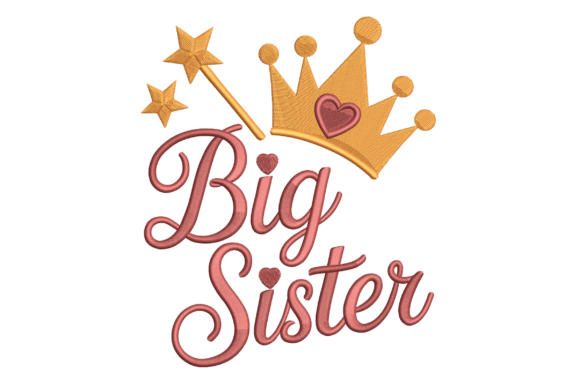
Aesthetically, the Big Sister design strikes a balance between playful personality and professional polish. The typography is clear and legible, avoiding the overly ornate scripts that often cause stitching complications. Clean lines and appropriate spacing between letters prevent thread bunching, a common issue in dense text-based designs. The visual appeal lies in its simplicity; it conveys warmth and familial connection without appearing cluttered or juvenile.
From a technical standpoint, the stitch count and density are calibrated for durability and comfort. When applied to wearable items like t-shirts, the design avoids excessive stiffness, which can be uncomfortable against the skin. The underlay stitches provide sufficient stabilization, ensuring that the top stitches sit evenly on the fabric surface. This attention to detail is critical for maintaining the professional appearance of the final product. Whether viewed up close or from a distance, the embroidery retains its shape and clarity, reflecting high-quality digitizing standards.
Practical Applications and Material Suitability
The versatility of the Big Sister design extends beyond its digital format to its physical application. It is engineered to perform well on a variety of substrates, making it a flexible choice for diverse projects. Below are some primary use cases where this design excels:
- Apparel: Ideal for cotton and poly-blend t-shirts, hoodies, and baby onesies. The design scales well, allowing for placement on chest pockets or larger back prints.
- Accessories: Works effectively on tote bags, canvas pouches, and diaper bags. The sturdy nature of these materials supports the stitch structure, resulting in long-lasting wear.
- Home Decor: Suitable for decorative pillows, burp cloths, and wall hangings. The clean aesthetic complements modern nursery themes or family-centric interior design.
For creators targeting specific niches, such as gift shops or online marketplaces, this adaptability allows for product diversification without the need for multiple specialized designs. A single asset can be repurposed across a entire collection, streamlining inventory management and marketing efforts.
Usability for Different Skill Levels
While experienced embroiderers will appreciate the technical precision of the Big Sister file, its user-friendly nature also makes it accessible to beginners. The "easy to stitch" characteristic is not just a marketing claim but a reflection of thoughtful digitizing. The design minimizes complex jumps and trims, reducing the likelihood of thread breaks or bird nests during the stitching process.
For novices, this reliability builds confidence. Successfully completing a project without technical hiccups encourages further experimentation and skill development. For seasoned professionals, it offers a dependable option for quick turnaround jobs where consistency is paramount. The design serves as a reliable baseline that can be customized with different thread colors or fabric choices to match specific brand identities or customer preferences.
Economic Value and Long-Term Utility
When evaluating digital assets, cost-effectiveness is determined by longevity and reuse potential. The Big Sister design offers substantial long-term value due to its timeless theme. Unlike trend-driven graphics that may become obsolete within a season, sibling-themed apparel remains a perennial seller. Family milestones, birthdays, and holidays create consistent demand for such personalized items.
For small business owners, the return on investment is realized through reduced design time and increased product reliability. By utilizing a pre-digitized, tested file, entrepreneurs can focus on marketing, customer service, and production scaling rather than troubleshooting design errors. Furthermore, the ability to produce high-quality items consistently enhances brand reputation, leading to repeat customers and positive reviews.
Considerations and Best Practices
Despite its strengths, optimal results require adherence to best practices in machine embroidery. Users should always test the design on a scrap piece of the intended fabric before committing to the final product. Factors such as stabilizer type, hoop tension, and thread quality significantly influence the outcome. For stretchy fabrics like jersey knits, a cut-away stabilizer is recommended to prevent distortion over time. For woven materials like canvas, a tear-away stabilizer may suffice.
Additionally, while the design comes in multiple sizes, users should verify the dimensions against their hoop capacity. Scaling a design beyond its intended range can alter stitch density, potentially leading to coverage issues or fabric puckering. It is advisable to stick to the provided size variations to maintain the integrity of the digitizing.
Conclusion
The Big Sister machine embroidery design represents a well-executed digital asset that meets the needs of both casual crafters and professional producers. Its combination of technical compatibility, aesthetic appeal, and practical usability makes it a valuable addition to any embroidery library. By addressing common challenges such as format fragmentation and stitch complexity, it offers a streamlined solution for creating personalized textile products.
For those looking to upgrade their crafting projects with reliable, high-quality designs, this file provides a solid foundation. It enables creators to produce items that are not only visually appealing but also durable and comfortable. Whether used for family gifts or commercial inventory, the Big Sister design delivers consistent performance and enduring relevance in the competitive world of custom embroidery.